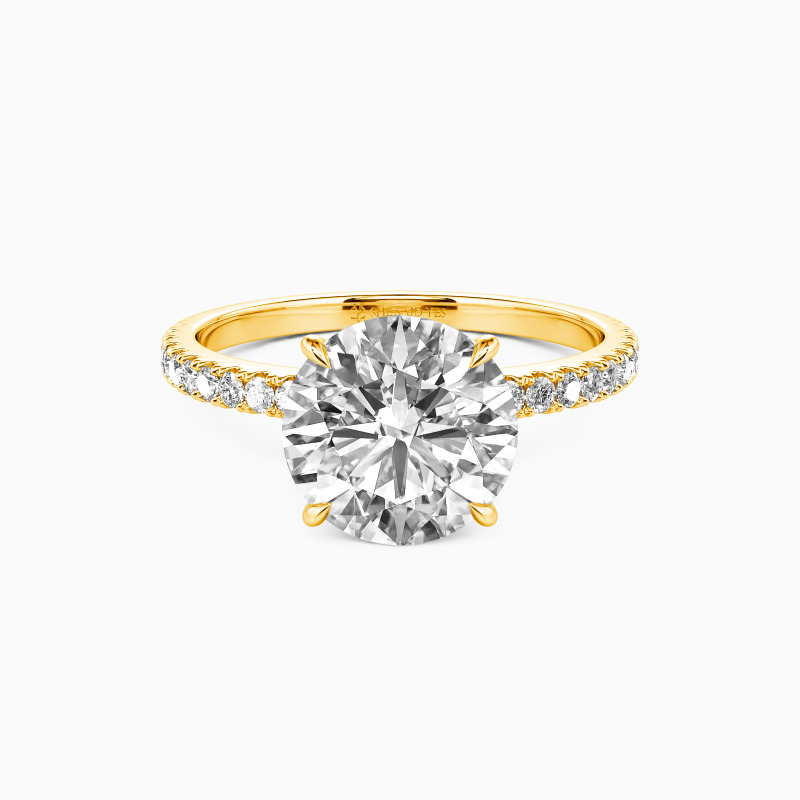
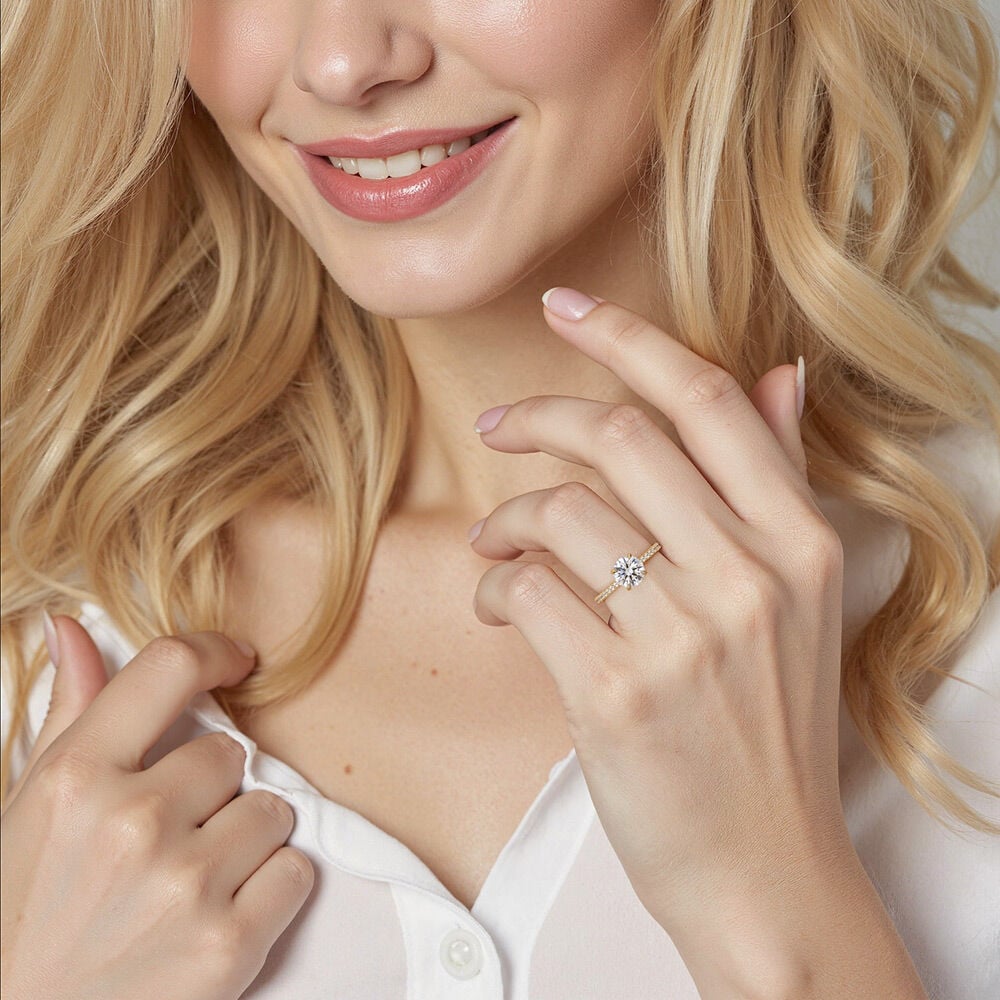
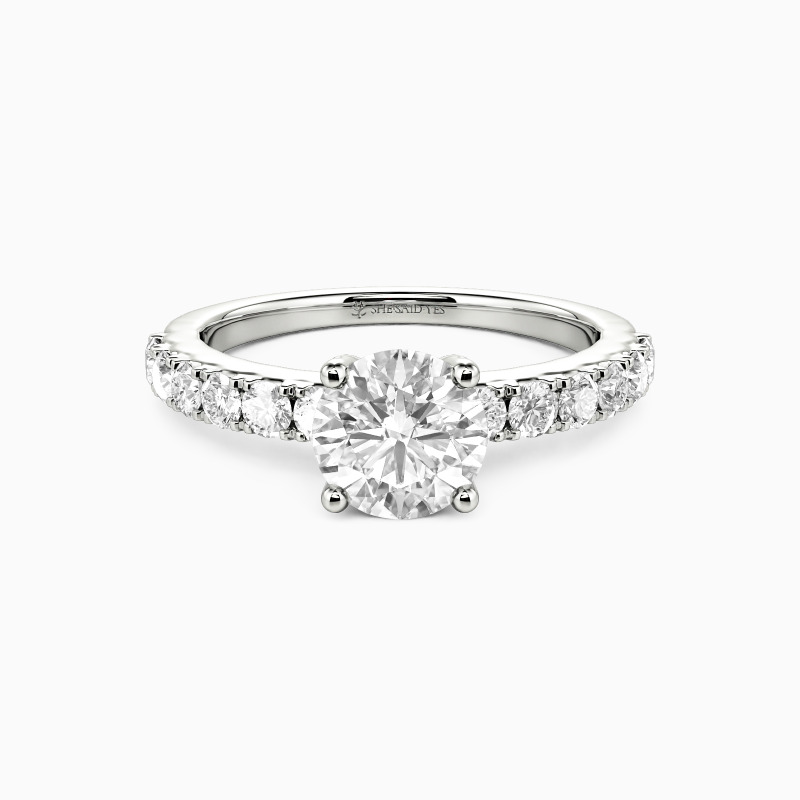
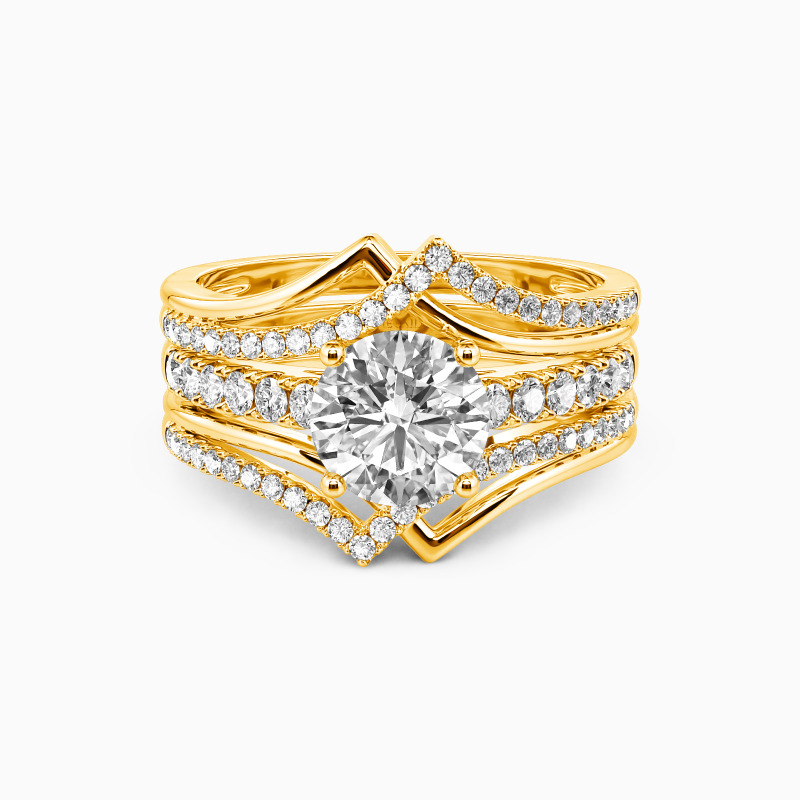
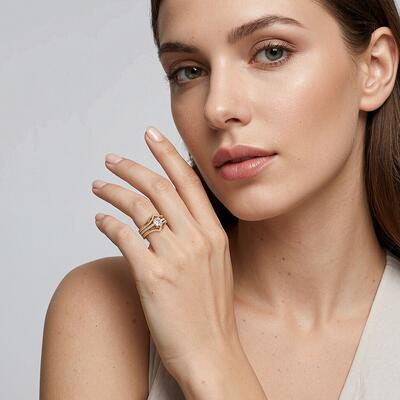
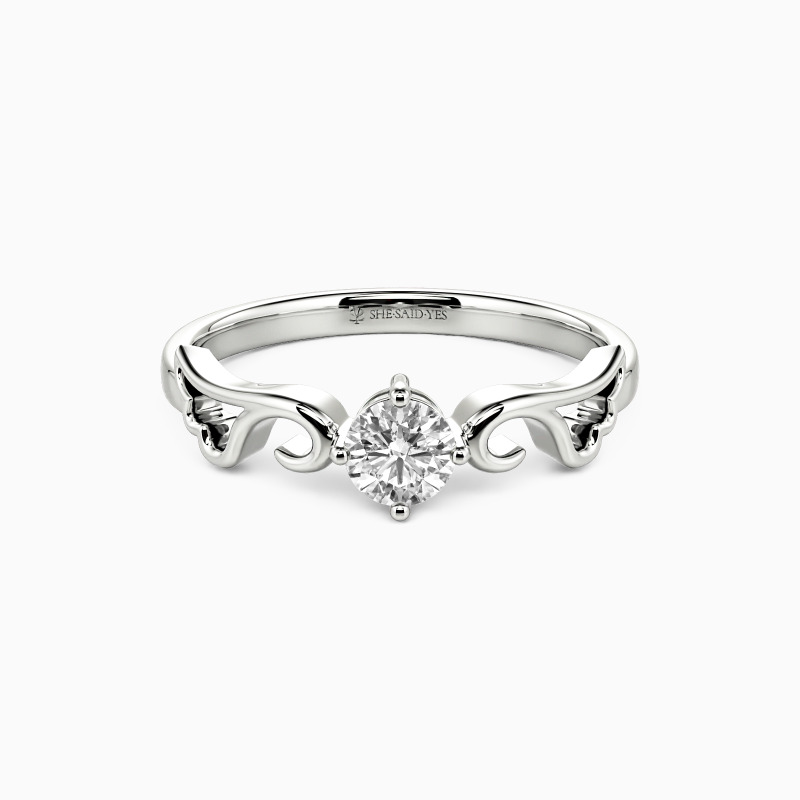
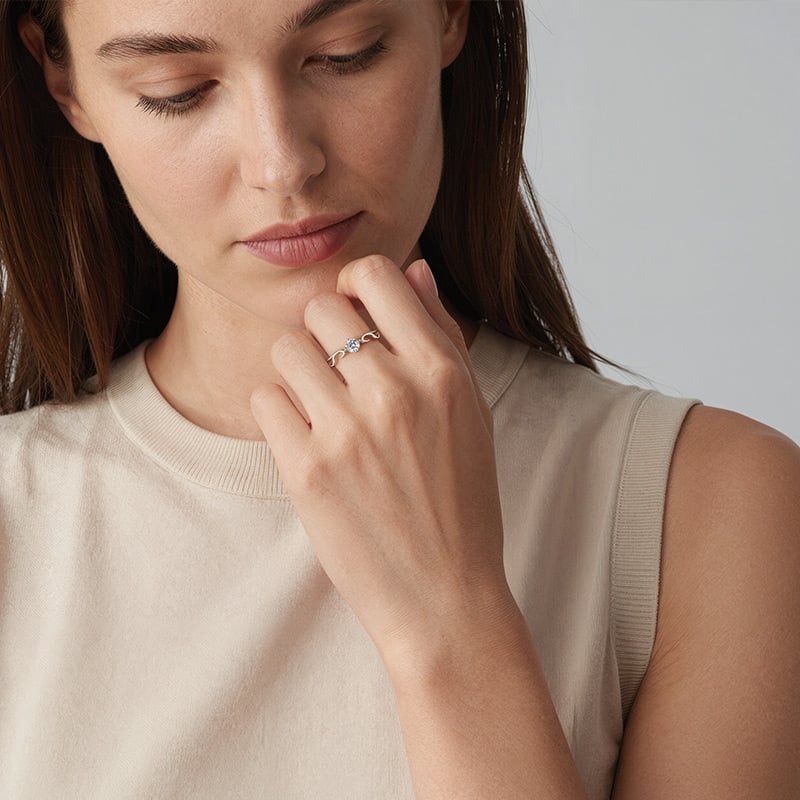
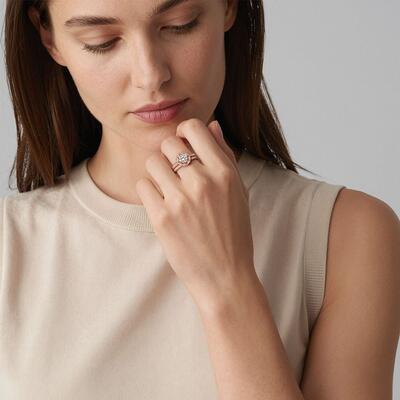
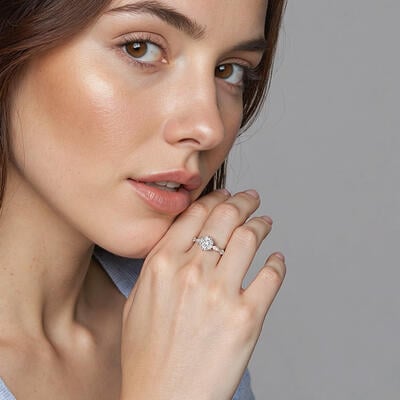
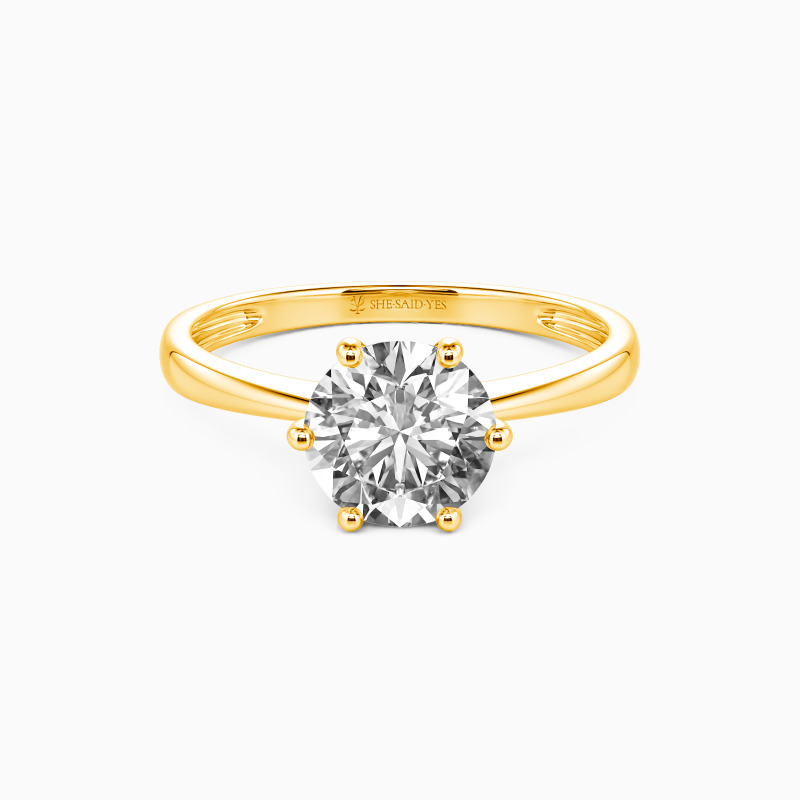
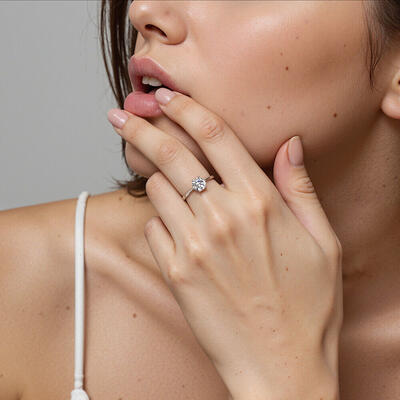
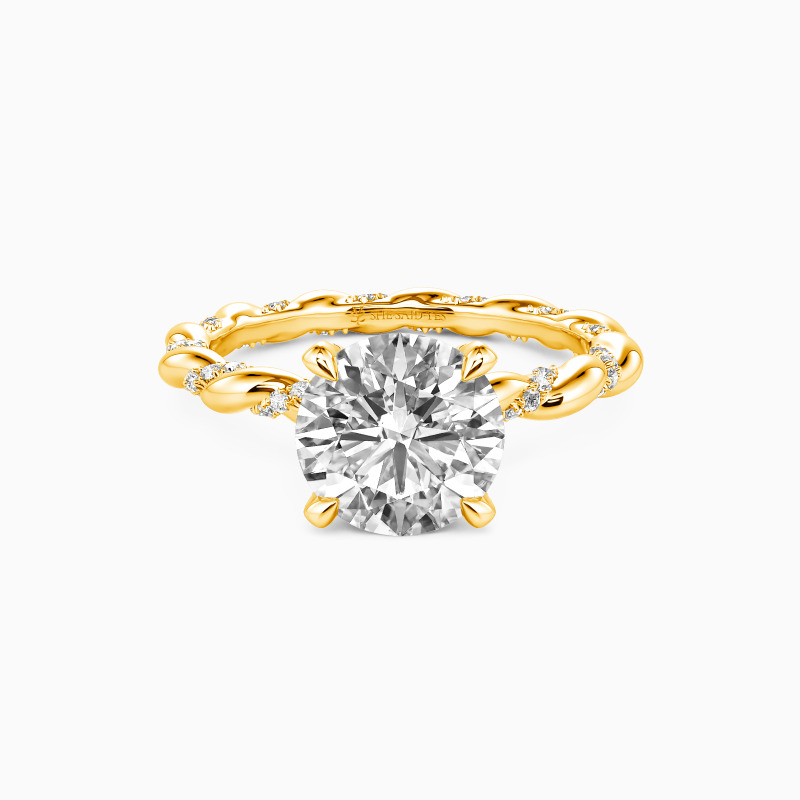
If you're drawn to the idea of a ring that never goes out of style, a round cut engagement ring is about as safe a bet as you can make. The round brilliant cut has been around in its modern form since the early 1900s, when mathematician Marcel Tolkowsky calculated the precise angles needed to unlock a diamond's full brilliance. His 58-facet formula is still the standard. It's why round diamonds outperform every other shape when it comes to consistent sparkle.
A circle has no beginning or end. That idea of "forever" is why round diamonds feel so fitting for an engagement. But there's a practical side, too: round diamonds tend to hide color tints and small inclusions better than many fancy shapes, so you can often get a brighter-looking stone without stretching to the top of the grading scale. Whether your taste runs classic, modern, or somewhere in between, this shape just works.
Popular Round Engagement Ring Settings
That adaptability is what makes round diamonds so easy to work with. Whether you want something minimal or rich with detail, the shape just fits. The most common styles include:
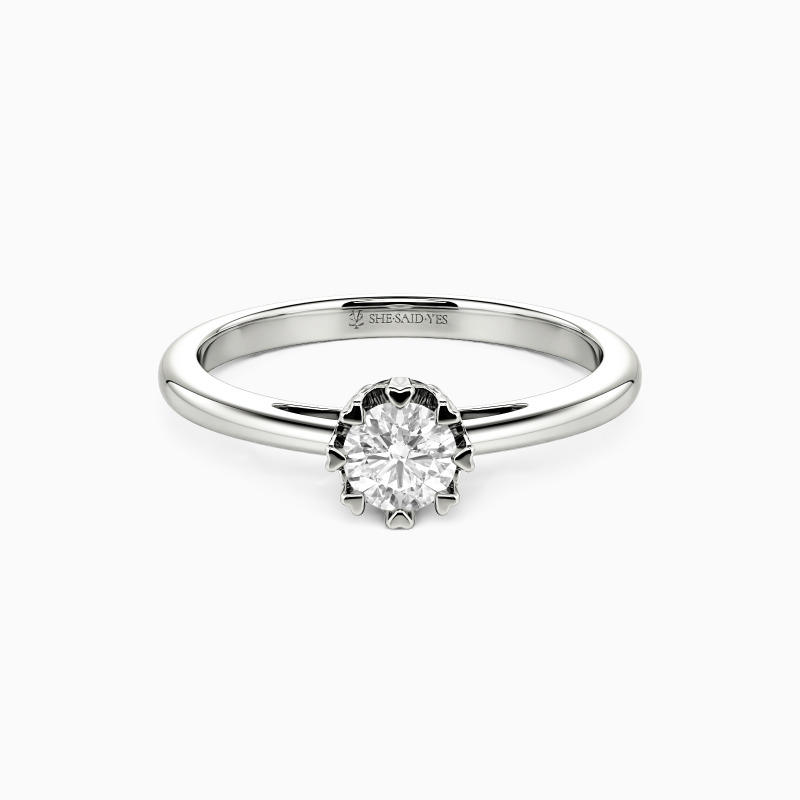
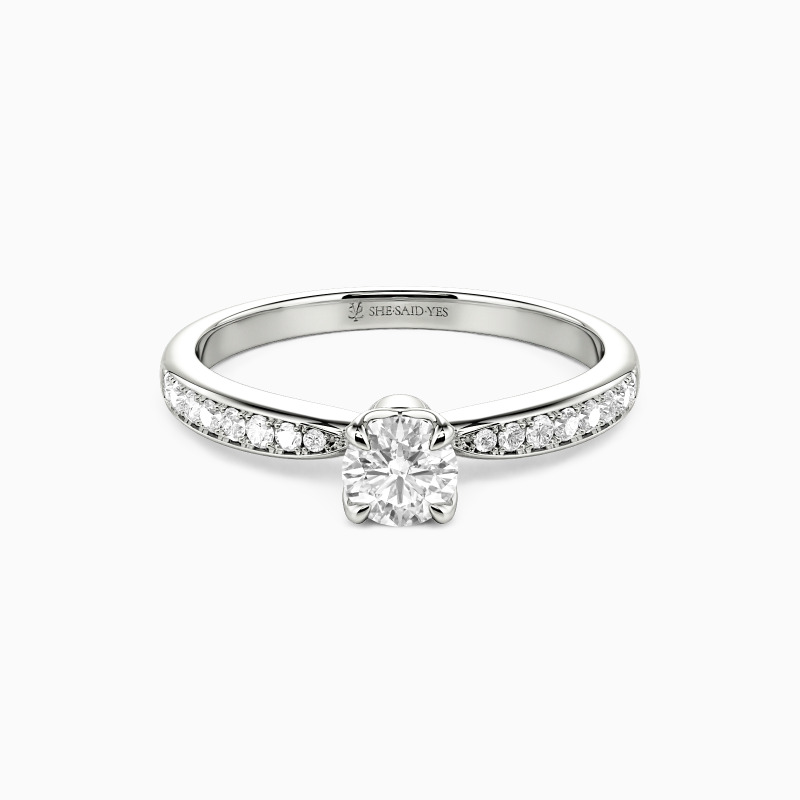
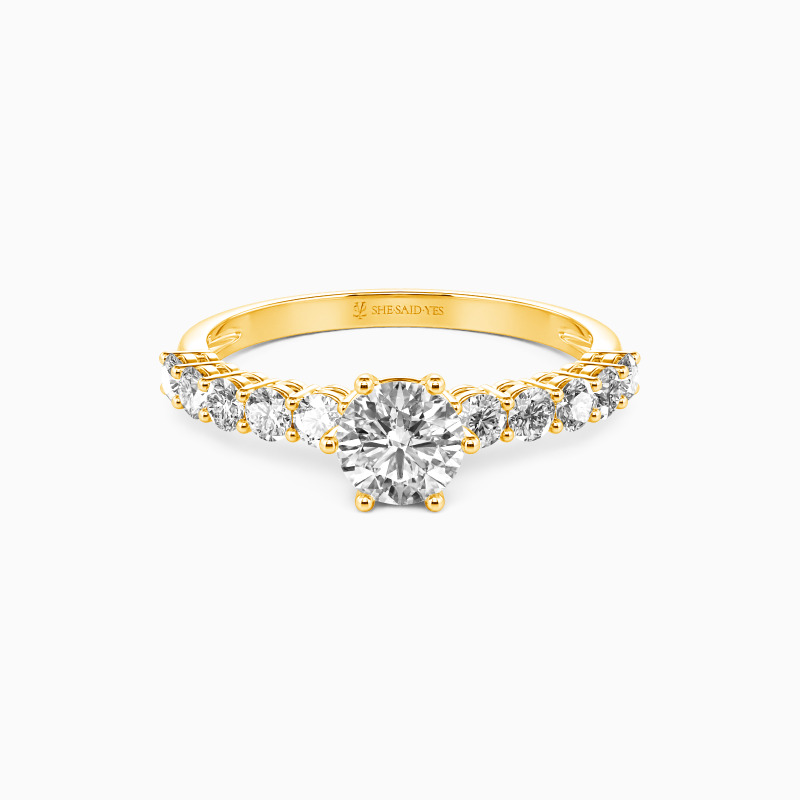
Solitaire settings: A single round diamond on a clean band. Nothing distracts from the stone, which is exactly the point.
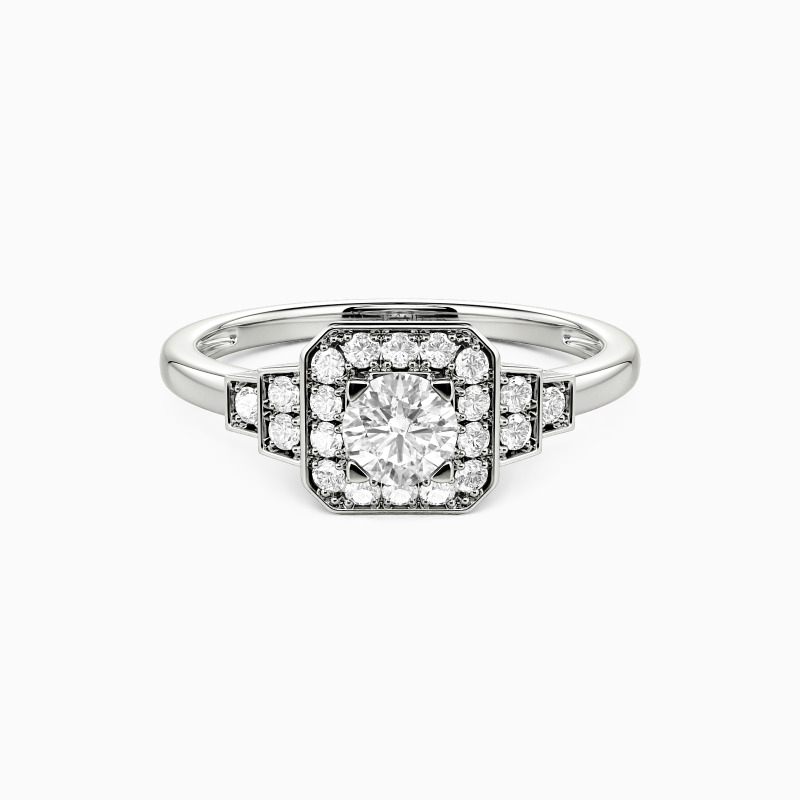
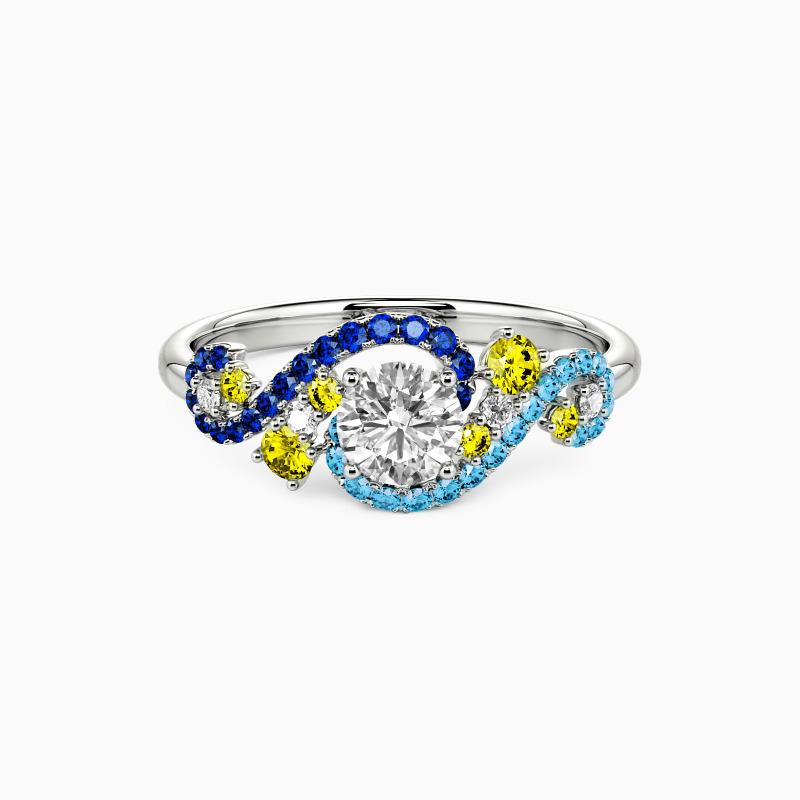
Halo settings: Smaller stones surround the center diamond, adding dimension and making it appear larger. If you want a bit more presence on the hand, this is a natural choice.
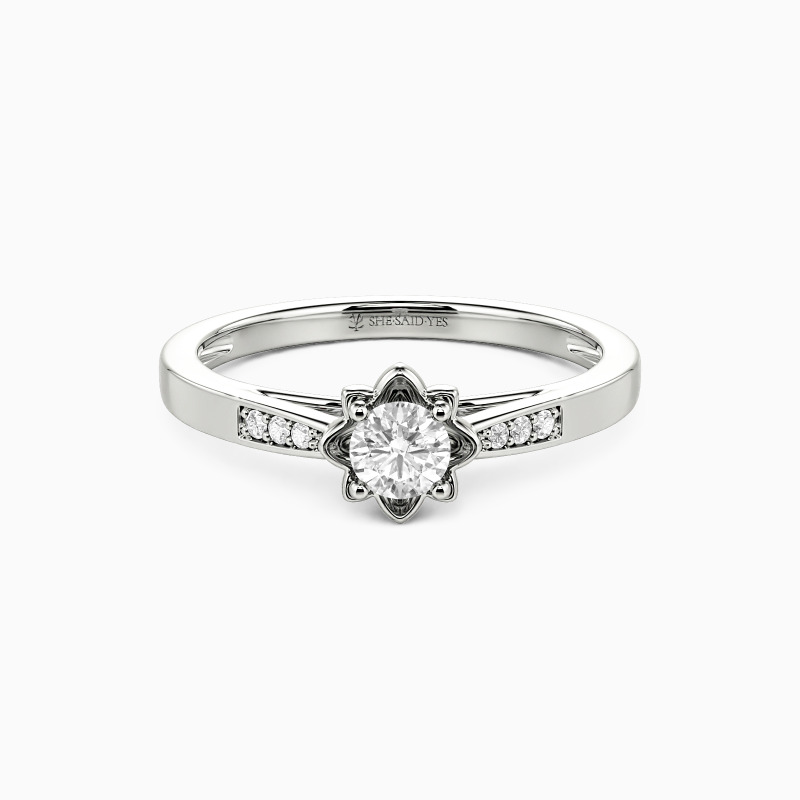
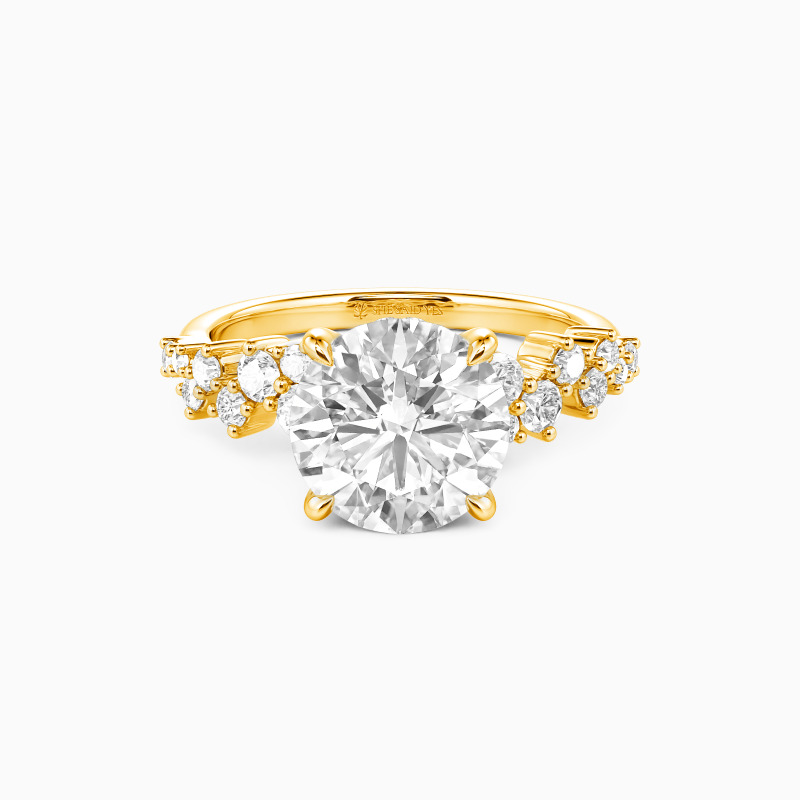
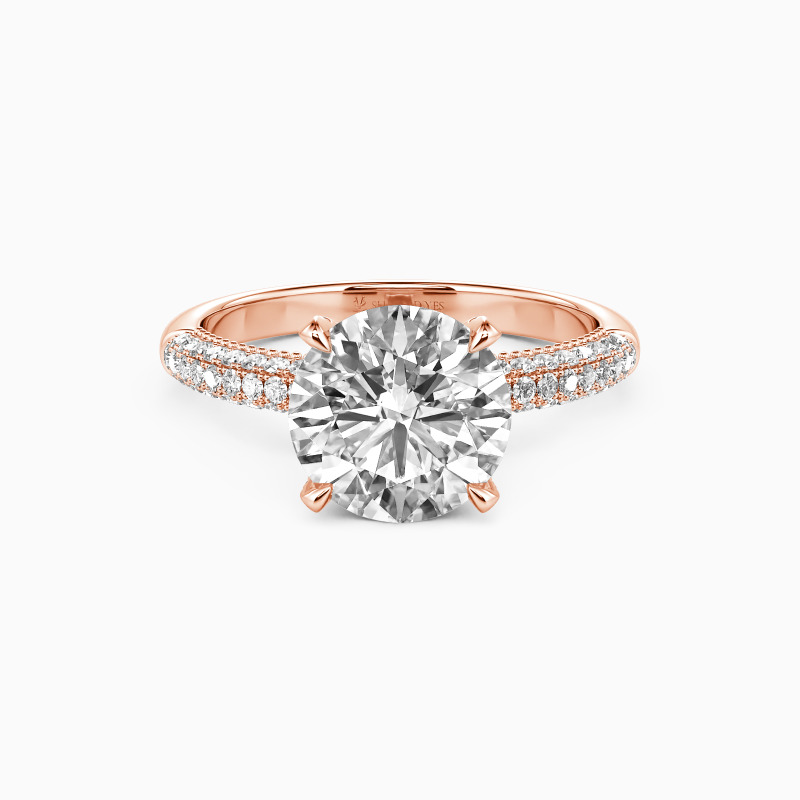
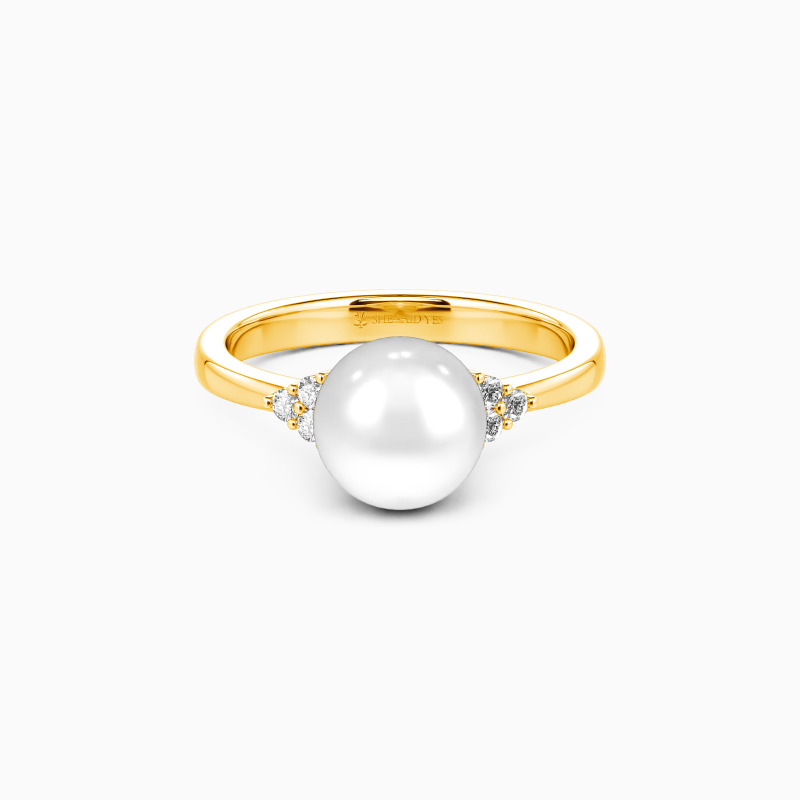
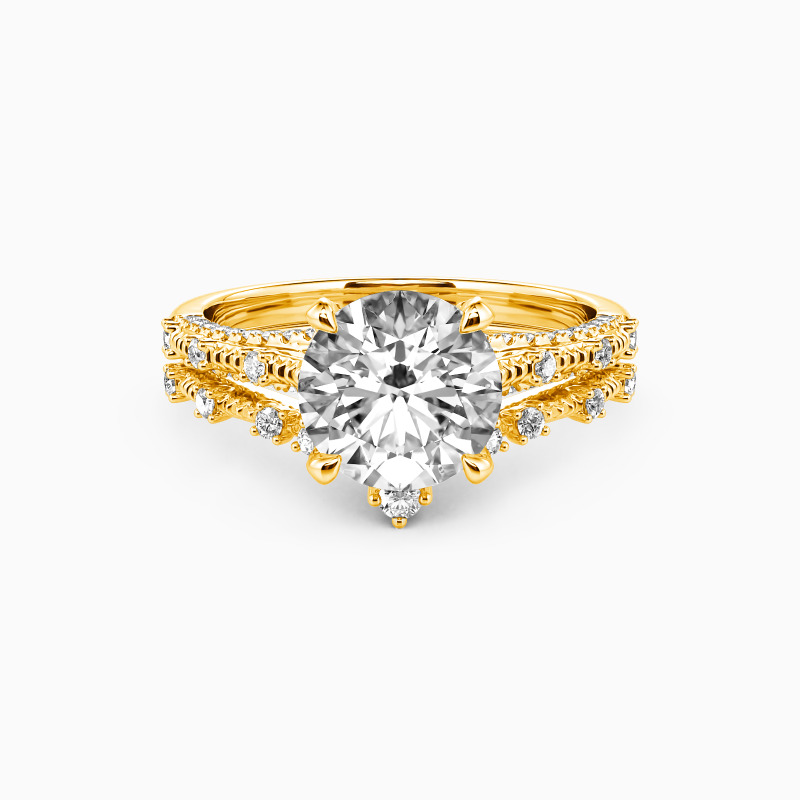
Hidden halo designs: Tiny diamonds along the band or tucked beneath the center add quiet detail without competing with the main stone.
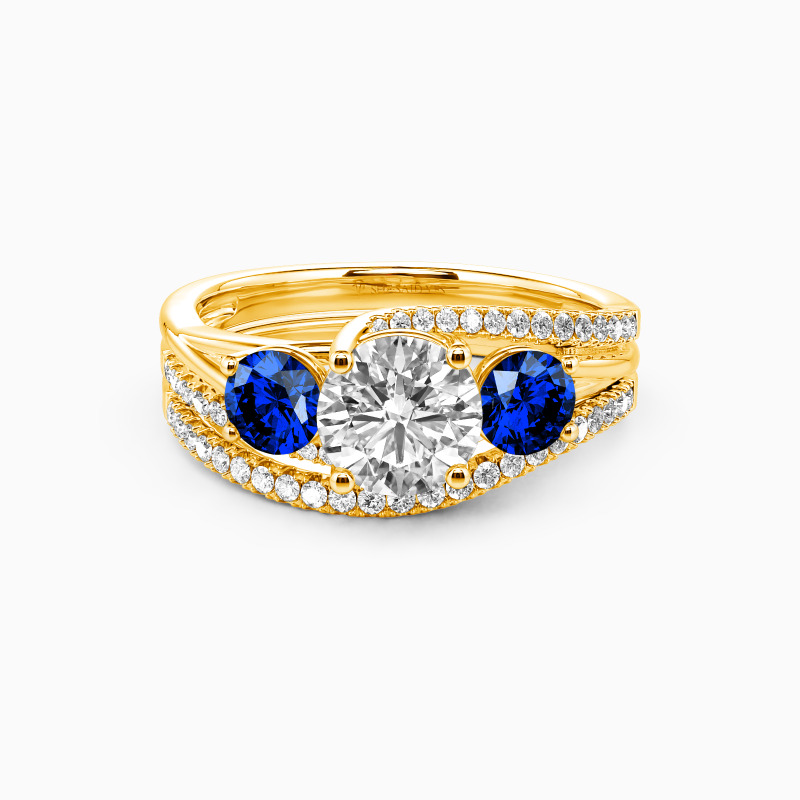
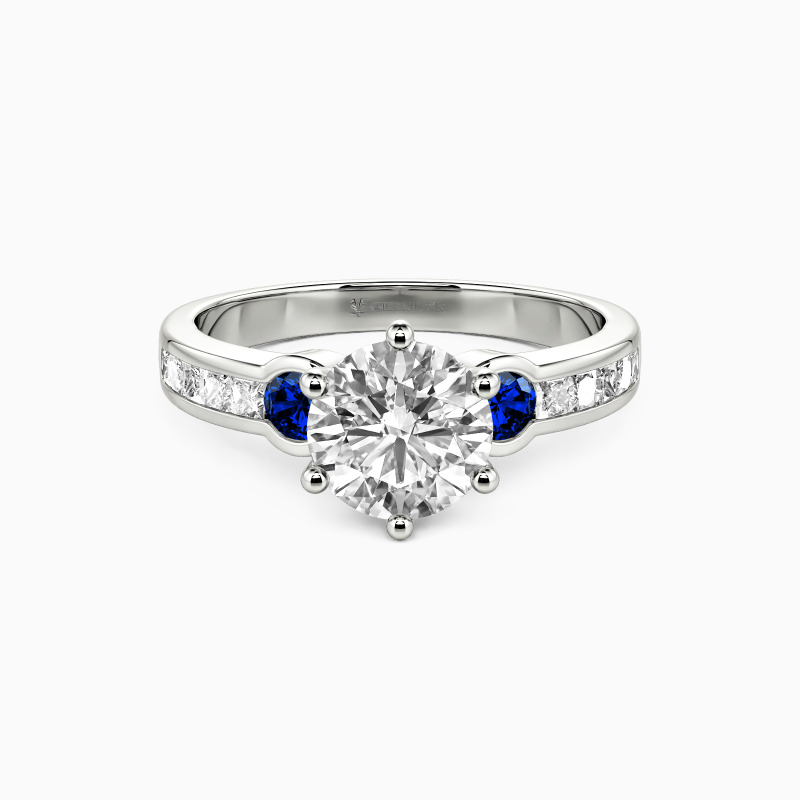
Three-stone settings: Three rounds representing past, present, and future. The symmetry of matching stones makes this style feel especially cohesive.
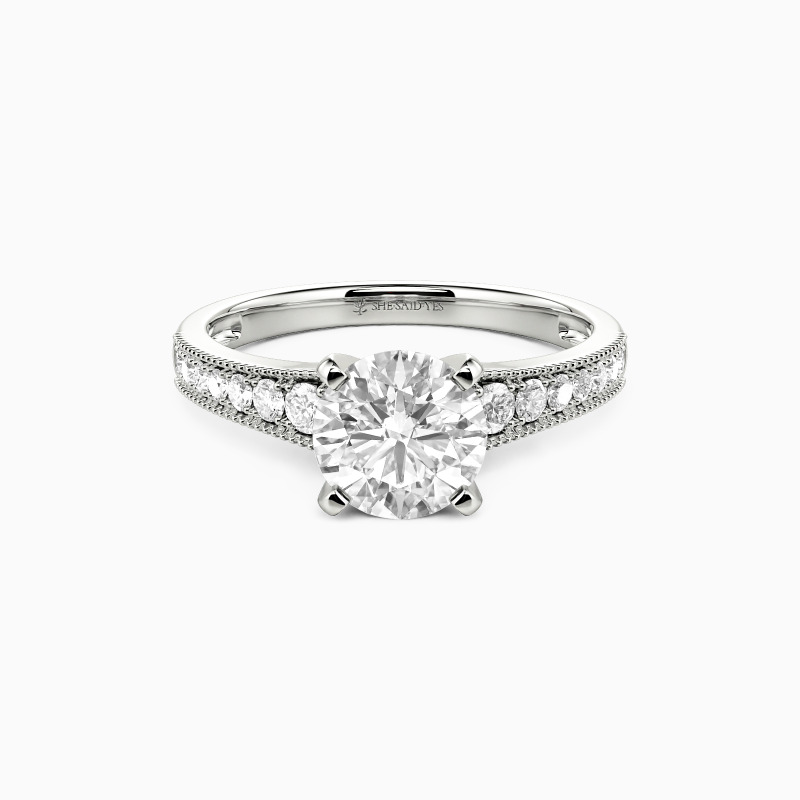
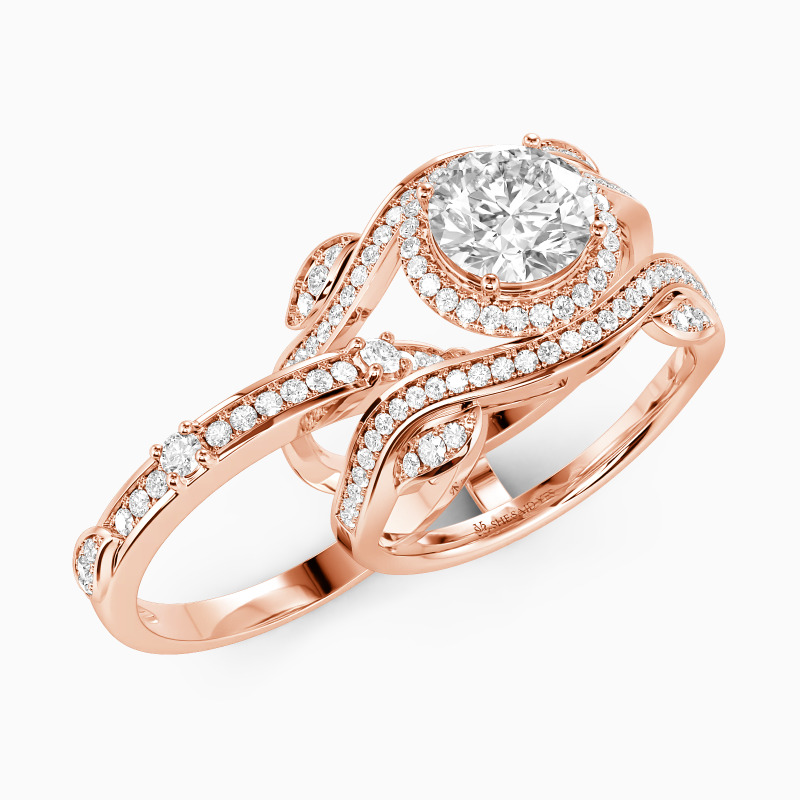
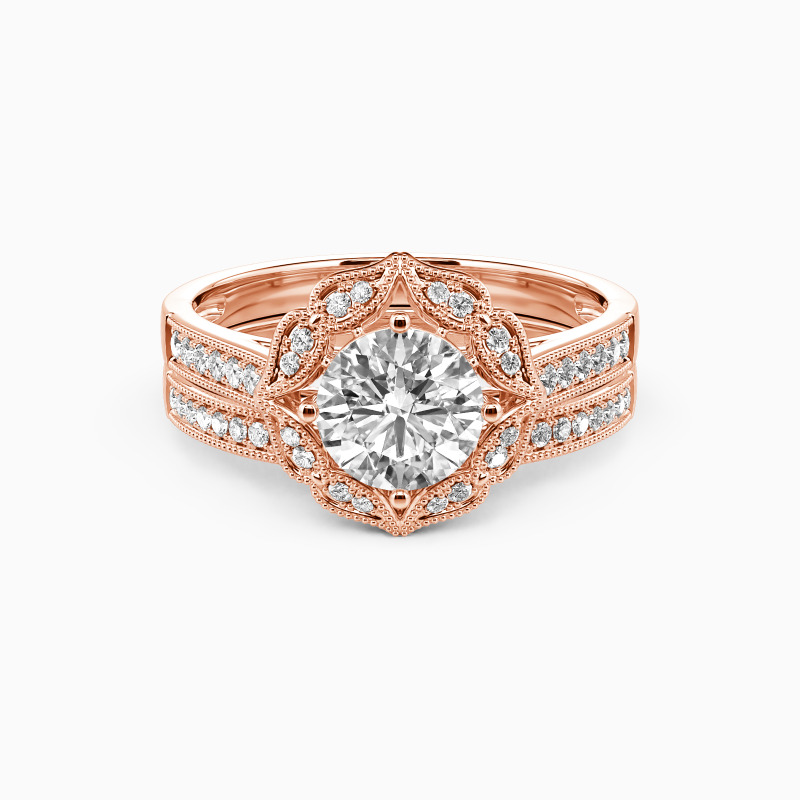
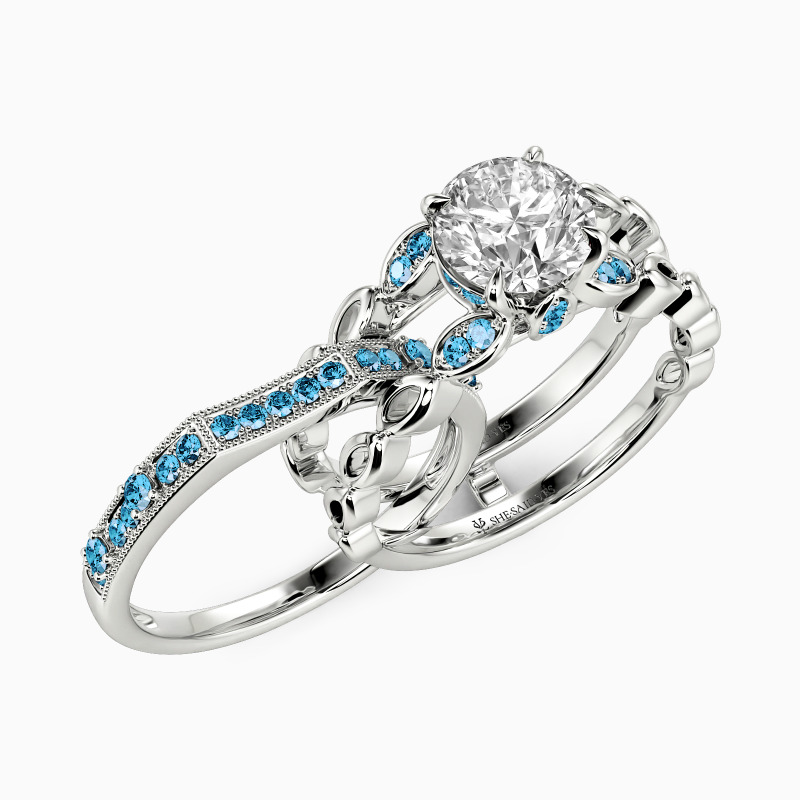
Vintage-inspired styles: Milgrain edges, delicate engraving, and antique-style details give round diamonds a softer, heirloom feel. Ideal if you're drawn to old-world romance with a little more character.
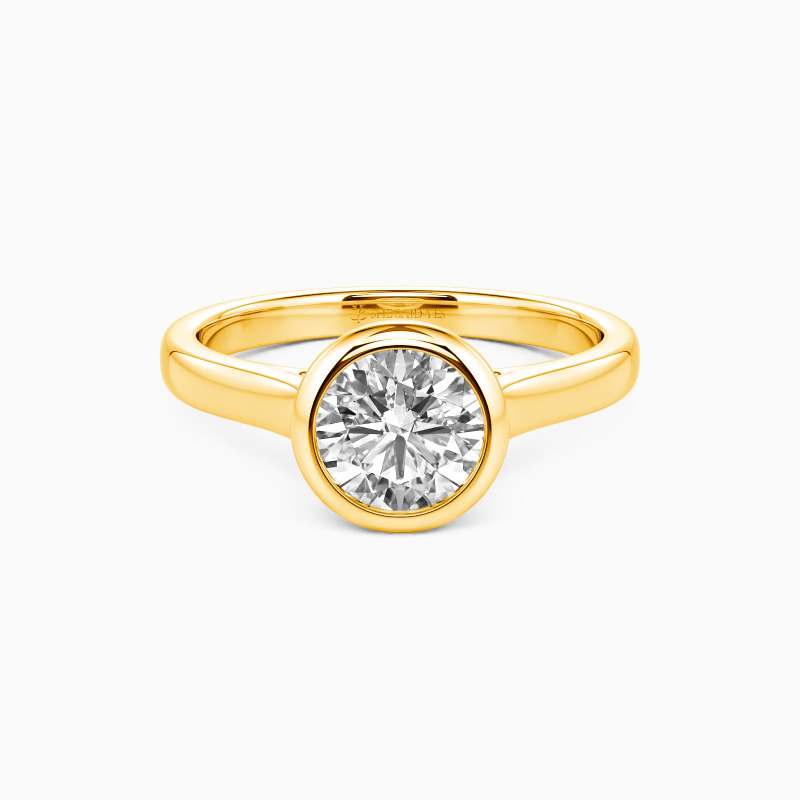
Bezel settings: A thin metal rim encircles the diamond for a sleek, modern look that also protects the stone. Worth considering if you work with your hands.
Because round diamonds are naturally symmetrical, they transition smoothly between minimalist and highly detailed designs. Explore different round diamond settings to see what feels closest to your style.
Pairing Round Engagement Rings with Wedding Bands
A wedding band should feel like it belongs next to the engagement ring, not like it was picked as an afterthought. Round engagement rings are among the easiest shapes to match, but a few details make the difference:
Straight bands work with most settings. If your engagement ring sits fairly flat, a classic straight band lines up naturally and keeps the look clean.
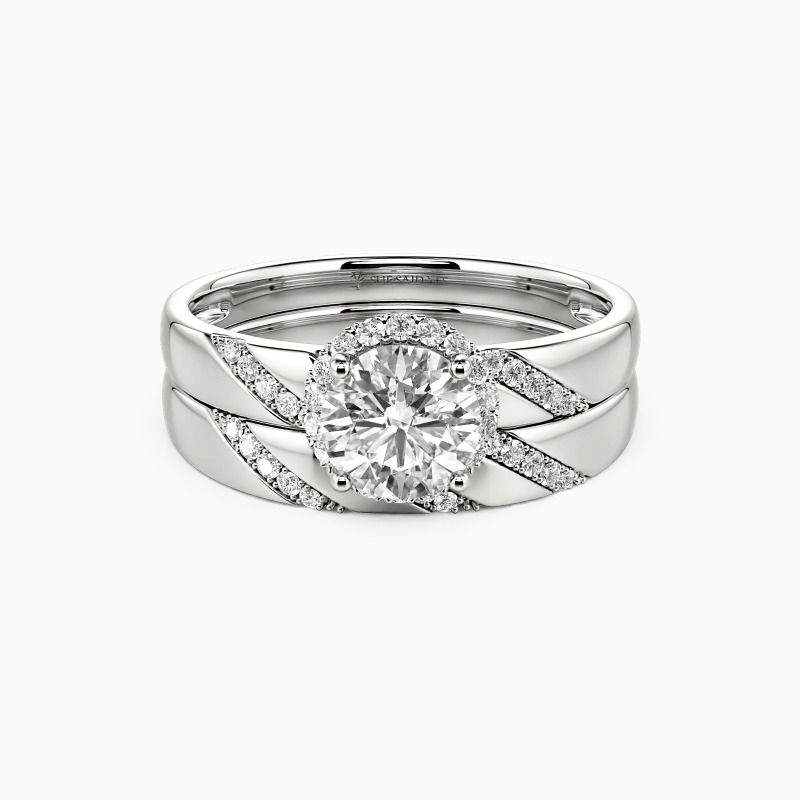
Contoured or notched bands fit detailed settings. Halos, side stones, and raised profiles often need a band that curves around them so everything sits flush.
Match the metal, or don't. Same metal keeps things cohesive. Mixing — like a warm rose gold band beside a cool platinum engagement ring — is a personal touch more couples are running with.
Consider a bridal set. Designed to sit flush together from the start, bridal ring sets take the guesswork out of pairing.
About She Said Yes Round Engagement Rings
We don't believe in one-size-fits-all. Your engagement ring should be built the way your story is — personal, intentional, and entirely your own. That's why every She Said Yes piece is made individually for the person who will wear it. You choose the details. We bring them to life by hand.
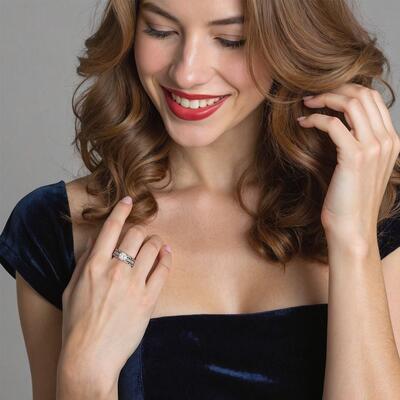
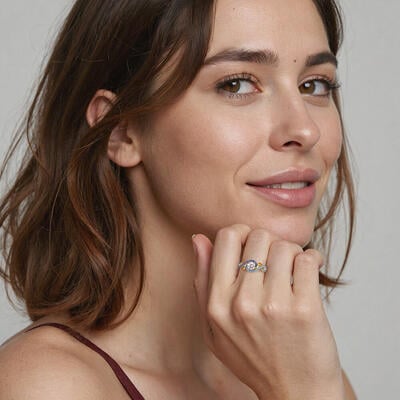
Round diamonds carry more of their weight in depth than elongated shapes, so while they may appear slightly smaller face-up at the same carat, the payoff is a level of fire that other cuts simply don't deliver. On most hand sizes, the proportions feel naturally balanced and comfortable for everyday wear.
Your stone. Your budget. Choose from lab-grown diamonds, moissanite, colored gemstones, or cubic zirconia. Round moissanite is especially popular for its exceptional brilliance and value. Pricing starts at approximately $400, depending on stone type, carat weight, and metal.
Crafted with care, each ring is made from recycled gold or platinum. Settings are refined for balanced proportions, secure stone placement, and lasting comfort. Every piece is individually inspected before it leaves our store.
Start designing your ring today, and we'll bring it to life by hand.