


Diamond Cut
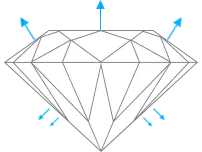
The only C that humans control. A masterful cut unlocks a diamond's inner fire, directing light through its facets to create brilliance, fire, and scintillation. At She Said Yes, we prioritize cut above all - because even a large diamond looks dull if poorly cut.
Fair
Good
Very Good
Ideal
Super Ideal
Fair
A reliable cut that reflects a moderate amount of light while maximizing weight. Not as radiant as a Good cut, yet still a fine diamond.
Diamond Color
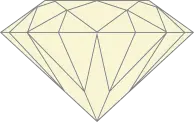
Color measures how colourless a white diamond truly is. The GIA/IGI scale runs from D (completely colourless) to Z (light yellow). For a crisp, white appearance, our customers most often choose grades D to F — though G‑J offer stunning value while remaining near‑colourless to the eye.
K
J
I
H
G
F
E
D
K Color
Slight warmth visible without magnification. A fantastic value choice.
Diamond Clarity
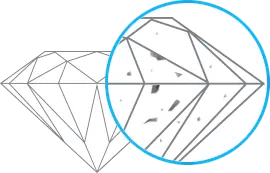
Clarity describes tiny natural marks inside the diamond (inclusions) or on its surface (blemishes). Most inclusions are microscopic and do not affect beauty. We recommend VS2 or SI1 for "eye‑clean" stones that look flawless without a loupe — a smart balance of quality and value.
SI2
SI1
VS2
VS1
VVS2
VVS1
IF
FL
SI2 – Inclusions can be seen with 10x magnification, and some may even be visible to the naked eye. Contains more inclusions than SI1.


Actual Diamond Size on Size 6 Hand
0.25CT
3.00CT
Diamond Carat
Carat is the diamond’s weight, not its size. A 1‑carat diamond weighs 0.2 grams. Two diamonds of the same carat can look very different depending on cut and shape. By considering diamonds just below common thresholds (0.9 instead of 1.0 carat), you can often get a nearly identical look for significantly less.


Diamond Shape: The Silhouette of
Your Love Story
Your Love Story
When you look at a diamond from above, its outline is its shape. (Don’t confuse it with cut – that’s how the diamond’s facets are arranged to catch light.) The classic round brilliant is the shape most people picture first. Any other shape – emerald, marquise, oval, princess, or pear – is called a "fancy shape."Each shape has its own personality:
• Emerald – Calm and elegant, with a "hall‑of‑mirrors" effect that feels sophisticated and vintage.
• Oval & Marquise – Elongated shapes that can make fingers look longer and slimmer. They also tend to look larger per carat because of their greater surface area.
• Princess – A modern square silhouette with brilliant sparkle, perfect for a contemporary edge.
A few practical things to keep in mind:
• Price – Fancy shapes are often less expensive than rounds of the same quality. You can often get a larger or higher‑grade stone for your budget.
• Durability – Pointed corners (on marquise, pear, and princess cuts) are a bit more vulnerable. A protective setting – like a bezel or V‑prongs – helps prevent chipping.
• Visual presence – Elongated shapes (oval, marquise, pear) often appear larger per carat than rounds. More surface area = more visible sparkle. At She Said Yes, we believe the right shape is the one that makes you smile every time you glance at your hand. Whether you lean toward a timeless round or a romantic pear, we’re here to help you find the silhouette that says "yes."
• Oval & Marquise – Elongated shapes that can make fingers look longer and slimmer. They also tend to look larger per carat because of their greater surface area.
• Princess – A modern square silhouette with brilliant sparkle, perfect for a contemporary edge.
A few practical things to keep in mind:
• Price – Fancy shapes are often less expensive than rounds of the same quality. You can often get a larger or higher‑grade stone for your budget.
• Durability – Pointed corners (on marquise, pear, and princess cuts) are a bit more vulnerable. A protective setting – like a bezel or V‑prongs – helps prevent chipping.
• Visual presence – Elongated shapes (oval, marquise, pear) often appear larger per carat than rounds. More surface area = more visible sparkle. At She Said Yes, we believe the right shape is the one that makes you smile every time you glance at your hand. Whether you lean toward a timeless round or a romantic pear, we’re here to help you find the silhouette that says "yes."
Find Your Signature Shape
The silhouette of your diamond — a reflection of your personal style.


Diamond Size: How Big It Looks, Not Just How Much It Weighs
People often use "size" and "carat weight" as if they mean the same thing – but they don’t. Carat tells you how much a diamond weighs. Size tells you how large it appears from above. And when it comes to sparkle and presence, perceived size is what really matters.
Size is measured in millimeters across the widest part of the diamond. For example, a classic 1‑carat round brilliant usually measures about 6.5mm in diameter. But an oval or marquise of the same weight can look noticeably larger – because their elongated shapes spread the carat weight over a wider surface area.
Your ring setting also plays a big role. A halo (tiny diamonds circling the center stone) adds extra shimmer and makes the main gem appear bigger. A cathedral setting lifts the diamond higher, giving it more prominence and catching more light.
So when you’re choosing your diamond, don’t just look at the carat number. Look at the millimeter measurements and think about how the shape and setting will work together. A well‑chosen combination can give you a stunning, generous look – sometimes without the higher carat price tag.
At She Said Yes, every diamond listing includes exact millimeter dimensions, so you can compare real size, not just weight. Because what matters most is how it looks on the hand you love.
Size is measured in millimeters across the widest part of the diamond. For example, a classic 1‑carat round brilliant usually measures about 6.5mm in diameter. But an oval or marquise of the same weight can look noticeably larger – because their elongated shapes spread the carat weight over a wider surface area.
Your ring setting also plays a big role. A halo (tiny diamonds circling the center stone) adds extra shimmer and makes the main gem appear bigger. A cathedral setting lifts the diamond higher, giving it more prominence and catching more light.
So when you’re choosing your diamond, don’t just look at the carat number. Look at the millimeter measurements and think about how the shape and setting will work together. A well‑chosen combination can give you a stunning, generous look – sometimes without the higher carat price tag.
At She Said Yes, every diamond listing includes exact millimeter dimensions, so you can compare real size, not just weight. Because what matters most is how it looks on the hand you love.

Types of Diamonds
Natural Diamonds
diamonds are born deep beneath the earth’s surface, where intense heat and pressure work on pure carbon – over 99.95% – for billions of years. This slow, powerful process makes diamond the only gemstone made of a single element. It’s also the hardest natural material on earth. Gem‑quality natural diamonds have always been rare, which is why they are treasured not only for their beauty but also for their enduring value. Passed down through generations, each one carries a story that began long before us.
Lab‑Grown Diamonds
Lab‑grown diamonds are, in every scientific sense, the same as natural diamonds – optically, chemically, and physically identical. The only difference is their origin. Instead of forming underground over eons, they are grown by skilled professionals using advanced technology that recreates the earth’s natural process. Because lab‑grown diamonds are not constrained by geological rarity, they are more accessible in price. That means you can often choose a larger or higher‑quality stone for your budget – while still enjoying a real diamond, grown with care for the planet."

4Cs of Diamonds: How to Find Your Perfect Combination
Finding the diamond of your dreams means balancing the 4Cs with what matters most to you. Here are a few practical tips from our team at She Said Yes to help you make the right choice.
1. Understand the 4Cs – then choose your priority
Learn how cut, color, clarity, and carat each affect a diamond’s beauty and price. Once you do, decide which quality matters most to you personally.
•If you love maximum sparkle, put cut first.
•If you want a diamond that looks big, you may decide to save on color, clarity, or even cut to afford a higher carat weight.
There’s no single "right" combination – your own taste should lead the way.
2. Look for value "sweet spots"
Certain grade combinations give you a gorgeous diamond without the premium price.
•Color: H-J diamonds appear nearly colorless to the naked eye, offering excellent value.
•Clarity:Depending on carat size and shape, VS2-SI1 grades are often "eye-clean" – no visible inclusions without magnification – but cost much less than higher clarity grades.
3. Choose your signature shape
Round diamonds deliver classic sparkle and timeless appeal, but they typically cost more per carat than fancy shapes (oval, cushion, emerald, etc.). Fancy shapes often give you better value and a distinctive look. Pick the shape that feels like yours – whether that’s a traditional round or something with more personality.
4. Always check the certificate
Every diamond you buy should come with a detailed grading report from a respected, independent lab – such as GIA, IGI, HRD, or GCAL. The certificate verifies that your diamond is authentic and provides an unbiased record of its 4Cs.